


Blogs
Multi-Brand vs. Single-Brand Dealerships: Pros and Cons

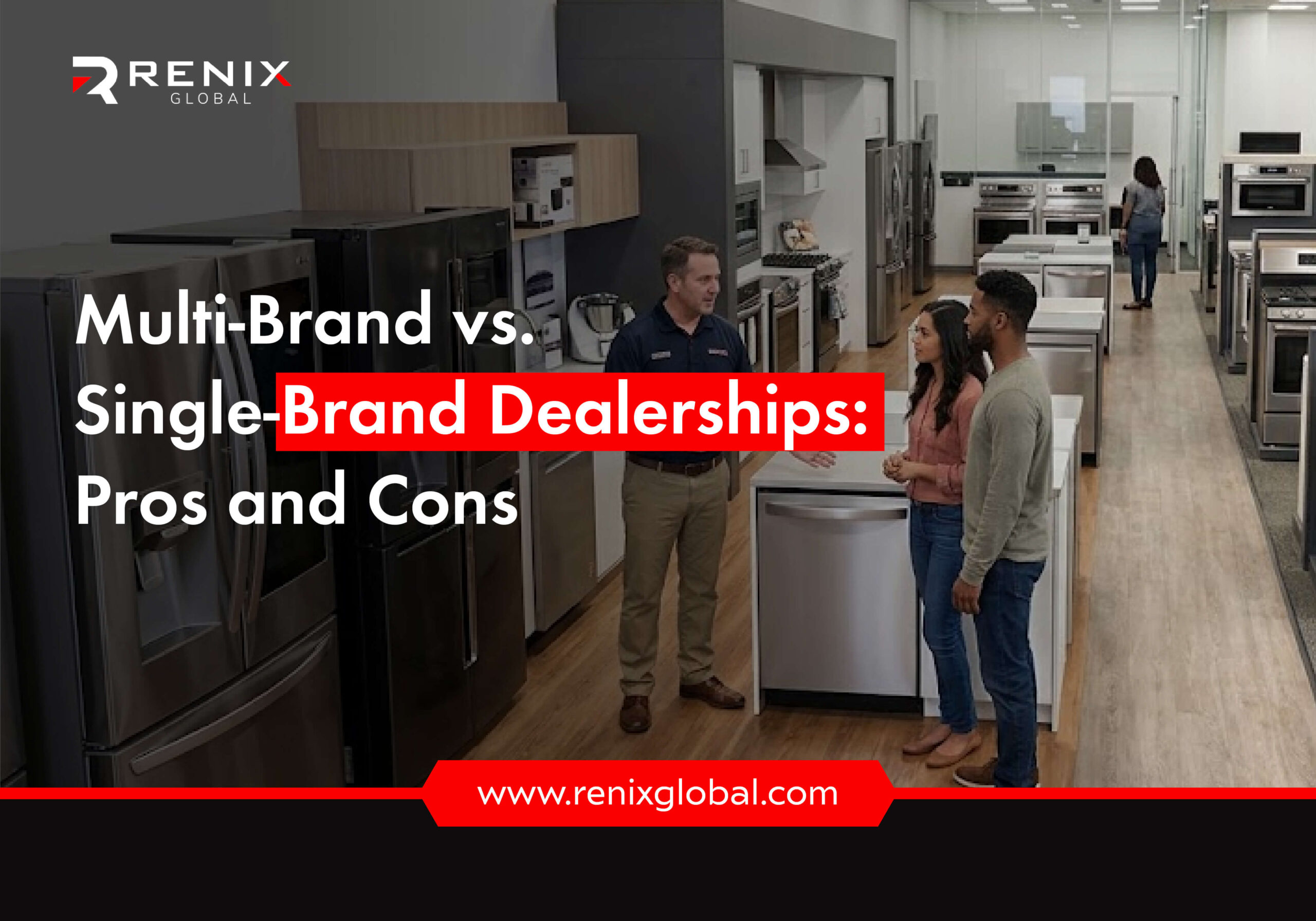
One of the more strategic decisions an appliance dealer faces is whether to build a business around a single brand or offer a wider mix of brands under one roof. Both models can succeed, but they come with very different operational demands, customer experiences, and growth paths. Understanding the tradeoffs can help you decide which approach fits your market, your capital, and your long term goals.
What Is a Single-Brand Dealership?
A single-brand dealership focuses exclusively on selling appliances from one manufacturer. This often comes with a formal agreement with that brand, sometimes including exclusivity requirements, co branded marketing support, and specific display or showroom standards.
What Is a Multi-Brand Dealership?
A multi-brand dealership carries appliances from several manufacturers, giving customers a wider range of styles, price points, and features to choose from under one roof. This model relies more heavily on wholesale distribution relationships rather than a single manufacturer partnership.
Pros of a Single-Brand Dealership
Simplified Operations
Carrying one brand simplifies training, marketing, and inventory management. Staff only need to become experts in one product line, which can lead to stronger product knowledge and more confident sales conversations.
Manufacturer Support
Many single-brand agreements come with cooperative advertising funds, marketing materials, and sometimes exclusive territory protections that limit competition from other dealers carrying the same brand nearby.
Strong Brand Identity
A single-brand store can build a very clear identity in the local market, becoming known as the go to dealer for that specific manufacturer, which can support strong word of mouth and repeat business.
Cons of a Single-Brand Dealership
Limited Customer Appeal
Not every customer wants that particular brand, and a single-brand store risks losing shoppers who arrive with a different brand preference already in mind.
Vulnerability to Brand Performance
Your business is directly tied to that manufacturer’s reputation, pricing strategy, and product quality. If the brand experiences supply issues, quality concerns, or pricing changes, your store feels the impact directly with no other category to fall back on.
Less Pricing Flexibility
With only one brand to offer, it can be harder to compete on price across different budget tiers, since you cannot offer a lower cost alternative within your own store.
Pros of a Multi-Brand Dealership
Broader Customer Appeal
Offering multiple brands allows you to serve a wider range of customers, from budget conscious shoppers to those seeking premium features, all without turning anyone away.
More Resilience Against Supply Issues
If one manufacturer experiences delays or shortages, a multi-brand dealer can pivot customers toward comparable options from another brand rather than losing the sale entirely.
Stronger Negotiating Position
Working with a wholesale distributor that supplies multiple trusted brands often gives dealers more flexibility to adjust their product mix based on margin, demand, and seasonal trends, rather than being locked into a single manufacturer’s pricing and product cycle.
Easier Upselling and Cross Selling
With a wider catalog, sales staff have more room to guide customers toward higher margin models or complementary products, such as pairing a range with a matching hood from a different brand if that combination fits the customer’s kitchen better.
Cons of a Multi-Brand Dealership
More Complex Operations
Training staff across multiple brands takes more time and effort, and inventory management becomes more complex when tracking several product lines with different specifications and warranty terms.
Less Manufacturer Support
Multi-brand dealers typically do not receive the same level of dedicated marketing support or exclusivity benefits that single-brand agreements often include.
Diluted Brand Identity
Without a singular brand focus, it can take more deliberate marketing effort to build a strong, memorable identity in a competitive local market.
Which Model Is Right for Your Business
The right choice often depends on your local market and your growth goals.
- Single-brand dealerships tend to work well in markets where a particular manufacturer has strong regional demand, or for dealers who want a more streamlined, focused operation with fewer moving parts.
- Multi-brand dealerships tend to work better in more competitive or diverse markets, where customer preferences vary widely and flexibility in pricing and product mix becomes a bigger advantage.
Many successful dealers eventually land somewhere in between, anchoring their store around one or two primary brands while supplementing with additional options from a trusted wholesale distributor to fill gaps in price point or product category.
Final Thoughts
There is no universally better model between single-brand and multi-brand dealerships. Each comes with real tradeoffs in simplicity, flexibility, resilience, and brand identity. The best approach is one that matches your local customer base, your operational capacity, and the strength of your supplier relationships, whether that means committing to one manufacturer or building a broader catalog through a reliable wholesale partner.

