


Blogs
How to Become an Appliance Dealer: A Step-by-Step Guide

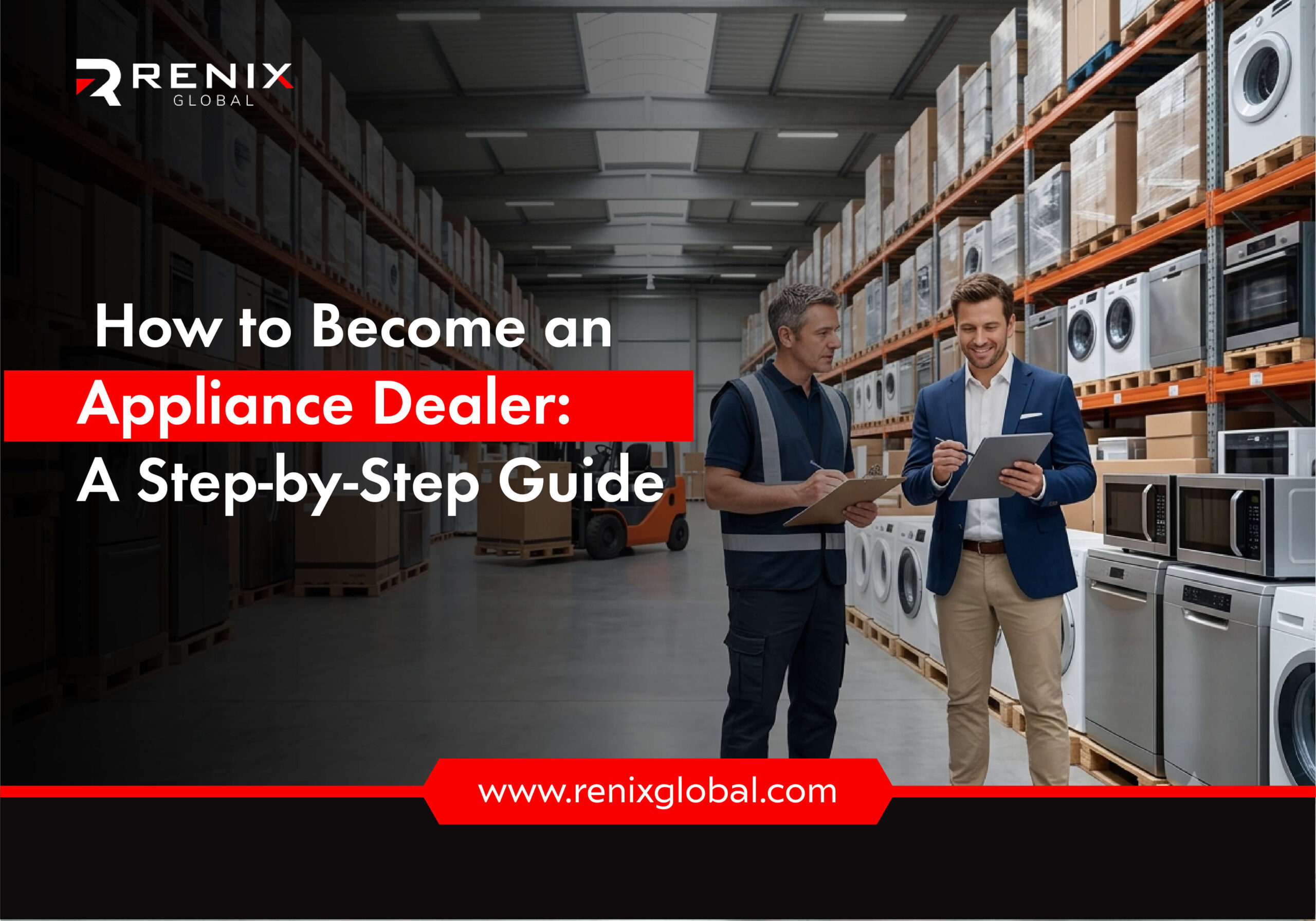
Starting an appliance dealership can be a smart move for entrepreneurs and retailers looking to enter a stable, high-demand industry. Refrigerators, washers, dryers, dishwashers, and other home appliances are essential purchases for nearly every household, which means consistent customer demand year-round. But before you can start selling, you need to understand what it actually takes to become a dealer.
This guide walks you through the process, from researching the market to placing your first wholesale order with a distributor like Renix Global.
Step 1: Research the Appliance Market
Before committing to a dealership, take time to understand the market you are entering. Look at local demand for appliance categories such as refrigeration, laundry, cooking, dishwashers, ventilation, and freezers. Consider your target customers: are you serving homeowners, contractors, property managers, or other retailers? Understanding your audience will shape which appliance categories and brands you should focus on.
It also helps to research your local competition. Identify gaps in the market, such as underserved categories or price points, where you can position your business effectively.
Step 2: Choose Your Business Structure
Like any business, an appliance dealership needs a proper legal foundation. Decide whether you will operate as a sole proprietorship, LLC, partnership, or corporation, and register your business accordingly. This step typically includes:
- Registering your business name
- Obtaining an Employer Identification Number (EIN)
- Applying for a resale certificate or sales tax permit
- Securing any local business licenses required in your area
A resale certificate is particularly important, since most wholesale distributors require one before they will sell to you at dealer pricing.
Step 3: Secure Funding and Set a Budget
Appliance inventory requires upfront capital, so it is important to map out your budget before reaching out to suppliers. Factor in costs such as:
- Initial inventory purchases
- Warehouse or showroom space
- Delivery and logistics
- Marketing and website setup
- Staffing, if applicable
Some dealers start small with a limited product range and scale up as sales grow, while others enter with a broader catalog from day one. Either approach can work, as long as your budget supports it.
Step 4: Find a Reliable Wholesale Distributor
This is one of the most important decisions you will make as a new dealer. Your distributor determines your access to inventory, pricing, delivery speed, and overall ability to keep your shelves stocked. When evaluating potential partners, look for:
- A wide selection of trusted brands
- Competitive wholesale pricing
- Reliable, nationwide shipping
- Manufacturer warranty coverage on products
- Responsive dealer support
Renix Global works with appliance dealers across the country, offering wholesale access to 21 trusted brands across six major appliance categories, including refrigeration, laundry, dishwashers, cooking, ventilation, and freezers. Partnering with a distributor that already has these relationships in place saves you the time and complexity of sourcing from multiple suppliers individually.
Step 5: Apply for Dealer Access
Most wholesale appliance distributors, including Renix Global, require dealers to apply for access before placing orders. This typically involves submitting basic business information, your resale certificate, and details about your operation. Once approved, you gain access to wholesale pricing and the full product catalog.
If you are ready to apply, you can request dealer access directly through the Renix Global dealer application.
Step 6: Understand Minimum Order Quantities and Pricing
Wholesale distributors often have minimum order quantities, which can vary depending on the appliance category and product availability. Before placing your first order, ask your distributor about:
- Minimum order requirements
- Volume-based pricing tiers
- Lead times for delivery
- Return and exchange policies
Having a clear picture of these details upfront helps you plan your inventory purchases and avoid surprises.
Step 7: Set Up Your Sales Channel
Once you have a distributor in place, you need a way to sell to customers. This might be a physical showroom, an online store, or both. Make sure your sales channel clearly communicates:
- The brands and product categories you carry
- Pricing and financing options, if offered
- Delivery and installation services
- Warranty and return policies
A well-organized sales channel builds customer trust and makes it easier to convert browsers into buyers.
Step 8: Place Your First Order and Manage Inventory
With dealer access approved and your sales channel ready, you can start placing wholesale orders. Pay close attention to which categories move fastest in your market so you can keep popular items in stock while avoiding overordering on slower-moving products.
Working with a distributor that offers consistent restocking and nationwide shipping, like Renix Global, makes it easier to maintain steady inventory without long delays between orders.
Step 9: Build Long-Term Relationships
Becoming a successful appliance dealer is not just about the first sale. It is about building a sustainable business through reliable supply, fair pricing, and strong customer relationships. Stay in close contact with your distributor about new products, seasonal demand shifts, and any changes in availability so you can adjust your inventory strategy accordingly.
Ready to Start Your Appliance Dealership?
Becoming an appliance dealer takes planning, the right paperwork, and a dependable wholesale partner. Renix Global supports dealers with access to trusted brands, competitive pricing, and nationwide distribution, so you can focus on growing your business instead of chasing down suppliers.
If you are ready to take the next step, request dealer access with Renix Global today and start building your appliance business with a partner you can rely on.

