


Blogs
How Much Inventory Should an Appliance Dealer Keep On Hand?

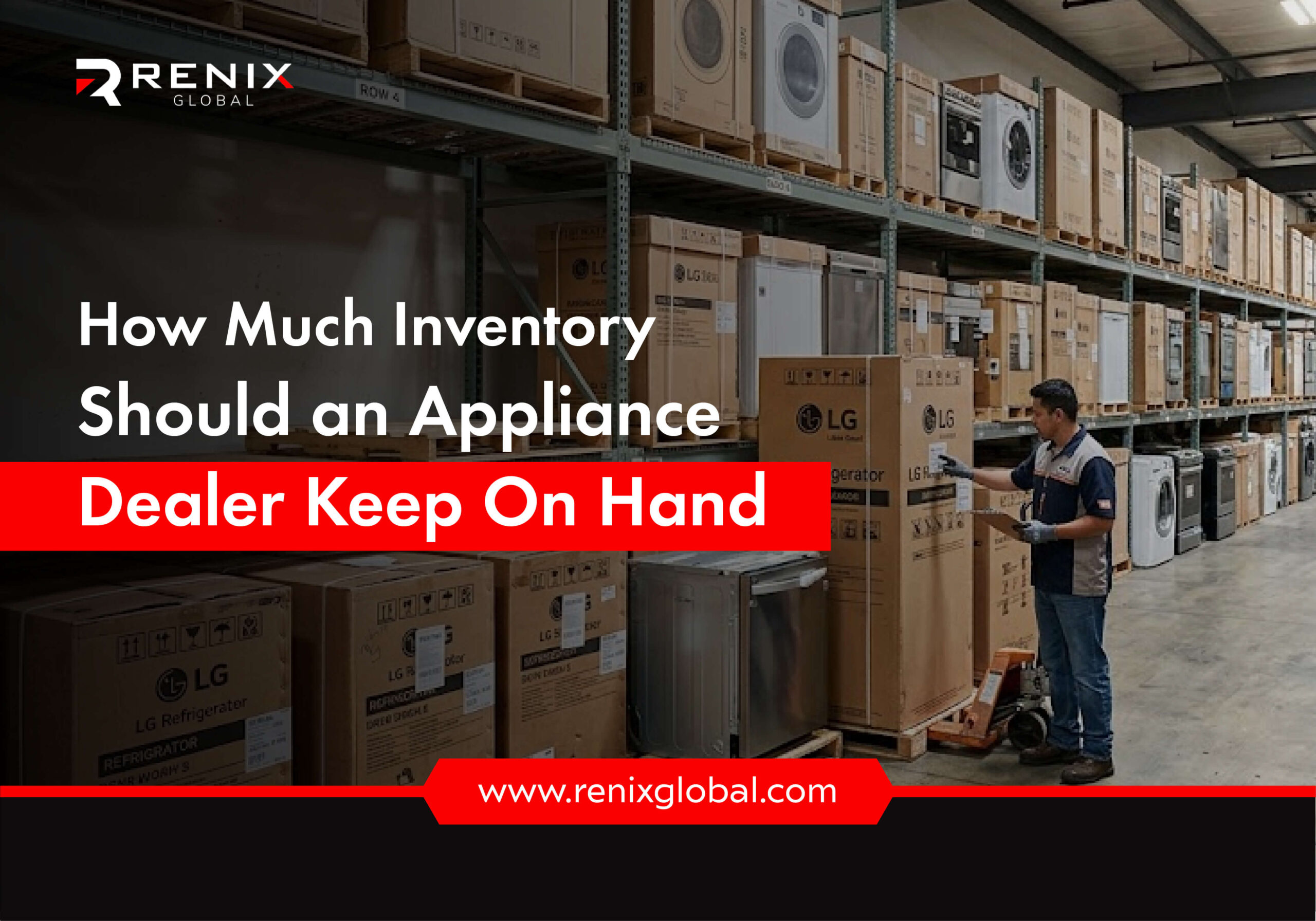
Inventory management is one of the trickiest parts of running an appliance store. Order too much, and you tie up cash in units that sit on the showroom floor or in a warehouse for months. Order too little, and you risk losing sales to a competitor when a customer cannot get what they need right away. Finding the right balance is not about guessing, it is about understanding your sales patterns, your supplier reliability, and the specific dynamics of each appliance category.
Here is how to think through the right inventory levels for your appliance business.
Why Inventory Levels Matter So Much in Appliances
Appliances are not like smaller retail products. They take up significant physical space, carry higher unit costs, and often involve longer replenishment timelines compared to smaller goods. This makes the cost of getting inventory wrong much higher.
- Overstocking ties up capital that could be used elsewhere in the business, increases storage costs, and raises the risk of holding outdated models as new versions are released.
- Understocking leads to missed sales, longer customer wait times, and can push buyers toward a competitor who has the item ready to go.
Key Factors That Determine the Right Inventory Level
1. Sell Through Rate by Category
Not every appliance category moves at the same pace. Refrigerators and ranges are often steady sellers year round, while categories like freezers or wine coolers may see more seasonal spikes. Track sell through rate by category so you are not applying a one size fits all inventory strategy across your entire catalog.
2. Lead Time From Your Distributor
If your wholesale supplier offers fast, reliable nationwide shipping, you can typically operate with leaner inventory levels since restocking is quick. If lead times are longer or less predictable, it makes sense to hold slightly more safety stock to avoid gaps between when you sell out and when new inventory arrives.
3. Seasonal Demand Patterns
Appliance demand is rarely flat throughout the year. Refrigerators and freezers often see spikes ahead of hurricane season in coastal regions, while ovens and cooking appliances tend to pick up around the holidays. Building a rough seasonal calendar for your region helps you plan inventory increases ahead of predictable demand rather than reacting after the fact.
4. Storage and Cash Flow Capacity
Your physical storage space and available capital are real constraints, not just preferences. A dealer with limited warehouse space or tighter cash flow needs to prioritize faster moving, higher margin categories rather than spreading inventory thin across every available model.
5. Product Lifecycle and Model Turnover
Appliance models get updated regularly. Holding too much inventory of a model nearing the end of its lifecycle increases the risk of needing to discount it once a newer version becomes available. Keep an eye on manufacturer release cycles so you are not caught holding outdated stock.
Practical Inventory Guidelines for Appliance Dealers
While exact numbers vary by store size and market, here are some general principles that apply across most appliance retailers.
- Fast moving categories like standard refrigerators, ranges, and washer dryer sets typically warrant higher stock levels since demand is consistent.
- Slower moving or specialty categories like wine coolers or compact secondary refrigerators can be stocked more conservatively, with quicker reorder cycles instead of large upfront quantities.
- Seasonal categories should be built up shortly before peak demand periods rather than held in high volume year round.
- New or unproven models are best ordered in smaller initial quantities until you have real sell through data to guide larger orders.
Building a Reorder System That Works
Rather than reordering reactively when shelves run low, many successful dealers set reorder points based on historical sell through data. This means identifying a minimum stock threshold for each model that triggers a new order automatically, giving you enough lead time to restock before you actually run out.
Working with a distributor that offers consistent inventory availability and dependable shipping timelines makes this kind of system far more reliable, since you are not left guessing whether a reorder will arrive in time.
The Cost of Getting It Wrong
It is worth remembering that both overstocking and understocking carry real financial consequences. Excess inventory ties up working capital that could otherwise go toward marketing, staffing, or expanding into new categories. Stockouts, on the other hand, can quietly push loyal customers toward a competitor, sometimes permanently.
The goal is not to eliminate risk entirely, since some fluctuation is unavoidable in retail. The goal is to build an inventory strategy based on real data and reliable supplier relationships, rather than guesswork.
Final Thoughts
There is no single inventory number that works for every appliance dealer. The right level depends on your sales history, your storage capacity, your cash flow, and how reliable your wholesale distributor is when it comes to restocking. By tracking sell through rates, planning around seasonal demand, and building a consistent reorder system, dealers can strike a healthier balance that protects both cash flow and customer satisfaction.

